So I couldn't post on time yesterday because the internet was down at school, and I had work after school and completely passed out right after work. But what I would have posted is my goals and ideas for the upcoming events that are slowly approaching. The presentation. I'm not sure what I want to do yet for the presentation; however, I do plan on talking about what i've been up to and what my creative project will be. The details such as how the class will participate is still a work in progress, but I'll probably be more concerned about that as June 6th (the day I present) comes closer.
So my creative project is going to be a short story written by a Korean-American, which is me. I wanted to use my own experiences as a Korean-American who's parents immigrated to America, much how many Korean-American authors have done so in the past. I can't promise the quality of it to be as impressive as their works but as a high school senior about to graduate in a month, it should be at least bearable to read.
So this week's goals are the following:
-Start to brainstorm about the presentation
-Start to brainstorm about the short story
this week is so good.
Wednesday, May 21, 2008

Monday, May 12, 2008
Paper is due friday...
...so the research paper is due this Friday and to be honest I don't think I'm even close to finishing it. From last weeks goals I've managed to start/complete some of them. I started organizing my research and started my introduction paragraph. As for reading Native Speaker, written by Chang-Rae Lee, I'm finding it hard to actually sit down and focus long enough to get into the novel. I should be finished with the book by Wensday, just giving me enough time to add the information extracted from it into my research paper. My goals this week are simple.
Week's goals:
-Finish book by Wensday
-For Tuesday - gather and organize last bits of information
-Finish Research paper
Hopefully this week will be a productive week.
Week's goals:
-Finish book by Wensday
-For Tuesday - gather and organize last bits of information
-Finish Research paper
Hopefully this week will be a productive week.
Monday, May 5, 2008
What I plan on doing this week in class.
Throughout this week I plan on:
- Continuing to read the novel, Native Speaker, written Chang-Rae Lee.
- Read and organize the information from various articles found from our school's library database.
- Make a simple and easy outline of the esay
- Start the introduction paragraph.
Even with goals such as these, with AP testing I honestly don't know if I can finish every goal on the list; however, apart from Tuesday's afternoon stats test, if I keep on task during class I should be ok. But due to lack of posting the past two weeks, for those who don't know i'm doing my research paper on Korean-American authors and their contribution to American Literature. From articles I've read so far, apparently Chang-Rae Lee's novel not only allows other Korean-Americans to empathize with the protagonists situation, but also incorporates themes that anyone could relate to. After I finish the novel I hope to start organizing the research I've collected so far and write my introduction paragraph.
This week should be fun....
- Continuing to read the novel, Native Speaker, written Chang-Rae Lee.
- Read and organize the information from various articles found from our school's library database.
- Make a simple and easy outline of the esay
- Start the introduction paragraph.
Even with goals such as these, with AP testing I honestly don't know if I can finish every goal on the list; however, apart from Tuesday's afternoon stats test, if I keep on task during class I should be ok. But due to lack of posting the past two weeks, for those who don't know i'm doing my research paper on Korean-American authors and their contribution to American Literature. From articles I've read so far, apparently Chang-Rae Lee's novel not only allows other Korean-Americans to empathize with the protagonists situation, but also incorporates themes that anyone could relate to. After I finish the novel I hope to start organizing the research I've collected so far and write my introduction paragraph.
This week should be fun....
Monday, March 24, 2008
Last post on A Clockwork Orange
A Clockwork Orange has been one of the most interesting novels i've read. After finishing the novel, i've realized the similarity A Clockwork Orange has with George Orwell's 1984. Both novels take place in dystopian dictatorships. In both novels there are clear distinctions with the government and the people. The citizens are denied their rights and freedoms. After such thinking, I searched on google thinking that there had to be some kind of criticism about this. In this article there a few points worthy of mentioning. Both protagonists are rehabilitated by the government. In 1984, Winston Smith eventually ends up loving the party and supporting Big Brother through means of torture. The government even turned Winston and Julia against each other. In A Clockwork Orange, Alex goes through similar brainwashing sessions along with torture to be the showcase of a new method of fixing people's behavior. The government plays a huge role in both novels. Big Brother and the Party oppresses their citizens but makes it so the citizens think they are being treated well. The government in A Clockwork Orange attempt to cover up their mistakes they did with Alex when he tried to commit suicide. After a while reading that article I wondered if societies like from the novels actually existed in reality.
Considering I need to do an A project I thought I would conduct research on communism and dictatorships and relate it to A Clockwork Orange. I skimmed through this website on the principles of communism. Communism is mainly credited to Karl Marx who is shown in the picture to the right. Communism is an economic system that is usually closely knit with dictatorship where the government controls the capital, unlike a capitalist society like we have in the United States. A doctor would make as much as a landscaper in a communist society. The reason why I think these types of systems of government relates to A Clockwork Orange is because if they were to brainwash or torture their own citizens I wouldn't be surprised. The citizens of North Korea are already being oppressed by Kim Jong-il. Being South Korean there are so many stories in Korean newspapers how the citizens of North Korea suffer. Many of them are famished and live in extreme poverty areas. If you guys are interested what goes on and how you can help there's an organization called L.I.N.K which stands for Liberty in North Korea. Here's the organizations website.
Considering I need to do an A project I thought I would conduct research on communism and dictatorships and relate it to A Clockwork Orange. I skimmed through this website on the principles
of communism. Communism is mainly credited to Karl Marx who is shown in the picture to the right. Communism is an economic system that is usually closely knit with dictatorship where the government controls the capital, unlike a capitalist society like we have in the United States. A doctor would make as much as a landscaper in a communist society. The reason why I think these types of systems of government relates to A Clockwork Orange is because if they were to brainwash or torture their own citizens I wouldn't be surprised. The citizens of North Korea are already being oppressed by Kim Jong-il. Being South Korean there are so many stories in Korean newspapers how the citizens of North Korea suffer. Many of them are famished and live in extreme poverty areas. If you guys are interested what goes on and how you can help there's an organization called L.I.N.K which stands for Liberty in North Korea. Here's the organizations website.
Thursday, March 13, 2008
There's not much left to blog about a Clockwork orange...
...but I eventually just typed "a clockwork orange anthony burgess" on google and looked for some articles to spark some ideas. After a while I found this article that goes into a bit of plot but summarizes the themes that are emphasized by the book, followed by the author's opinions and themes that are emphasized by the movie. The author of the book does nothing but praise how well the movie stayed loyal to the novel.
"Stanley Kubrick's film version of 'A Clockwork Orange' is one of the greatest translations of a book to the cinema screen."
Although It's taking me longer than I had initially expected to finish the novel, reading this article makes me want to just do it; however, it doesn't give me the great motivation needed to actually go through and finish the book promptly.
After some more thought about this post I went back to google and found a book review website that only has such high praise for the novel. I don't understand what is so great about a clockwork orange. Sure it's one of the classical satirical novels that one should read, but I'm just not that into it. Perhaps is the language Burgess created. Nadsat. Everyone gives Burgess an almost genius title for writing a book written with a new teenage slang in a futuristic dystopian society, but honestly, I think I could have made up a few words and slapped them in a book. I'm not saying that the way Burgess forced the reader to actually follow along with his language by context clues should not be acknowledged, but to me it seems that some people seem to like the fact that he just invented his own language (which i'm sure a lot of you did when you were younger). For me, it's not that he made his own language, with fused teenage slang and Russian, but the way he used it. It's obvious that of the central points of the novel is to bash on communism, and by using a new language combined with Russian, it just adds to the satirical genius.
Overall I'm enjoying the novel in a slow process. HOPEFULLY I can finish it up this week.
"Stanley Kubrick's film version of 'A Clockwork Orange' is one of the greatest translations of a book to the cinema screen."
Although It's taking me longer than I had initially expected to finish the novel, reading this article makes me want to just do it; however, it doesn't give me the great motivation needed to actually go through and finish the book promptly.
After some more thought about this post I went back to google and found a book review website that only has such high praise for the novel. I don't understand what is so great about a clockwork orange. Sure it's one of the classical satirical novels that one should read, but I'm just not that into it. Perhaps is the language Burgess created. Nadsat. Everyone gives Burgess an almost genius title for writing a book written with a new teenage slang in a futuristic dystopian society, but honestly, I think I could have made up a few words and slapped them in a book. I'm not saying that the way Burgess forced the reader to actually follow along with his language by context clues should not be acknowledged, but to me it seems that some people seem to like the fact that he just invented his own language (which i'm sure a lot of you did when you were younger). For me, it's not that he made his own language, with fused teenage slang and Russian, but the way he used it. It's obvious that of the central points of the novel is to bash on communism, and by using a new language combined with Russian, it just adds to the satirical genius.
Overall I'm enjoying the novel in a slow process. HOPEFULLY I can finish it up this week.
Sunday, March 9, 2008
How messed up are Alex and his droogs...
So far I've finished Part I of a Clockwork Orange. One thing that stands out the most is the disrespect and cruelty Alex and his "droogs" have towards their elders. As I said in my last post, I grew up in a Korean household which swayed my opinion of such debauchery. Ever since I was young it was embedded in my head to address my elders (even someone who is only one year older) with respect and obedience. Reading about how Alex and his "droogs" beat old men and women without a conscience made me curious about elderly abuse in our society. After doing some research via Google, I found some interesting day. According to this website World Elderly Abuse Awareness day was on June 15th, 2007. It's pretty sad how there is a day dedicated to elderly abuse. Although the majority of elderly abuse comes from neglect, there is still a great number of physical and even sexual abuse towards elders. If you want to read some information about elderly abuse download this pdf. The pdf consists of statistical information about elderly abuse. It's pretty hard to imagine your grandparents or elders abused in elderly homes with over 1 million reports of elderly abuse (with the majority coming from retirement homes). Check it out if you are interested enough...
In other news, I really want to watch the movie version of a Clockwork Orange, but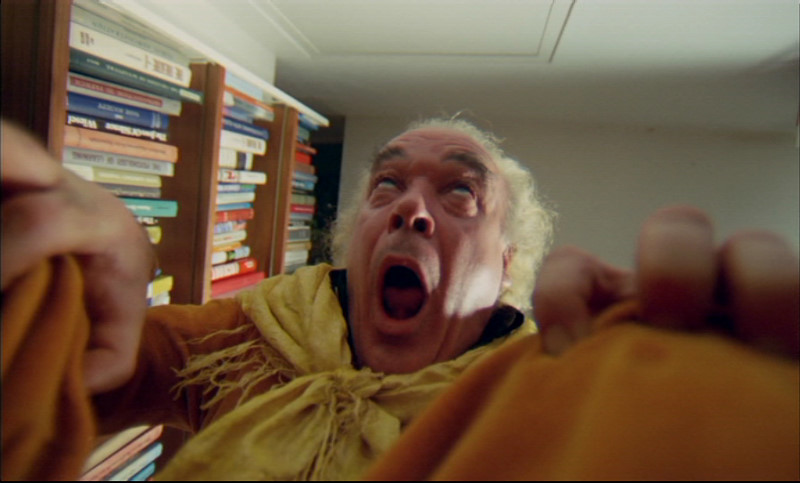 unfortunately I'm only only on part II. While researching about elderly abuse I found this picture from the movie related to the matter. You can just see the misery the man must be going through after being beat up by a bunch of malchicks.
In other news, I really want to watch the movie version of a Clockwork Orange, but
unfortunately I'm only only on part II. While researching about elderly abuse I found this picture from the movie related to the matter. You can just see the misery the man must be going through after being beat up by a bunch of malchicks.
Friday, February 29, 2008
A Clockwork Orange.
So, for my second book I chose A Clockwork Orange by Anthony Burgess. My initial reaction = impossible to read. After I read the first page I was having second thoughts about continuing the novel, but from what i've heard from those who already read it, you get used to it. It's interesting how Burgess makes the reader figure out his unique language. Personally, half the fun about reading the book is figuring out what the words mean via context; however, for those of you who are reading and want a shortcut you can click here for a glossary of the terms.
Before I get into what I think of the book so far, I want to share a few thoughts even before I began reading it. Mr. Bernardi, the oddest teacher i've ever had, actually told me the movie version of the book was really good. He failed to mention that the majority of people find the movie disturbing beyond all belief. The video below was a user review on the movie. It's funny how she goes, "It is the most messed up movie." She continues to review the movie and ends with, "it's a fascinatingly weird movie." Although movies have a tendency of being very different from the novels the are based on, i'm curious to how the movie took the book and created such a disturbing movie. I want to know what was in the book that inspired the movie makers to portray it in such a way. Furthermore, the cover of our books create an interesting image. Its the bottom half of person apparently screaming, with the top half in flames. Although it's probably just an aesthetic tool for marketing, It has to have some meaning in the book. As i continue to read i'm just excited to see what goes on. Ken, who sits in front of me in English highly recommended the novel; however, i'm 54 pages into it and all i've encountered were meaningless acts of violence. So far Alex and his droogs beating up on people. When i read the part when they go into the cottage and find the book, "a clockwork orange" I expected something wild, but I didn't. I guess the book develops more as it goes on. I'm starting to understand the society they live in, where the young are able to roam freely abusing their elders. Personally, coming from a strict Korean household, abuse and even simple disrespect for elders is intolerable. As for a novel goes, i'm enjoying reading it. It's very different from what I would expect to read for school. By the way, sorry for the quality and ads in the video. Yahoo video is awful.
Before I get into what I think of the book so far, I want to share a few thoughts even before I began reading it. Mr. Bernardi, the oddest teacher i've ever had, actually told me the movie version of the book was really good. He failed to mention that the majority of people find the movie disturbing beyond all belief. The video below was a user review on the movie. It's funny how she goes, "It
is the most messed up movie." She continues to review the movie and ends with, "it's a fascinatingly weird movie." Although movies have a tendency of being very different from the novels the are based on, i'm curious to how the movie took the book and created such a disturbing movie. I want to know what was in the book that inspired the movie makers to portray it in such a way. Furthermore, the cover of our books create an interesting image. Its the bottom half of person apparently screaming, with the top half in flames. Although it's probably just an aesthetic tool for marketing, It has to have some meaning in the book. As i continue to read i'm just excited to see what goes on. Ken, who sits in front of me in English highly recommended the novel; however, i'm 54 pages into it and all i've encountered were meaningless acts of violence. So far Alex and his droogs beating up on people. When i read the part when they go into the cottage and find the book, "a clockwork orange" I expected something wild, but I didn't. I guess the book develops more as it goes on. I'm starting to understand the society they live in, where the young are able to roam freely abusing their elders. Personally, coming from a strict Korean household, abuse and even simple disrespect for elders is intolerable. As for a novel goes, i'm enjoying reading it. It's very different from what I would expect to read for school. By the way, sorry for the quality and ads in the video. Yahoo video is awful.Wednesday, February 13, 2008
The Psychology of a Holocaust Survivor (Wiesenthal)

Unfortunately due to my poor work ethic and lack of concentration it looks like I'm going to finish the assignment after break. I'd actually rather not blog about this; however due to the requirements of the class I must include something relevant to the marvelously dull novel, The Sunflower. By the way that picture to the left is Simon Wiesenthal in deeeeep thought, thinking about his past trauma.
Alright so if you already don't know, I'm having a hard time deciding what I would have done in Simon Wiesenthal's place. I can't relate to his story because I'm not Jewish, but I can imagine the psychological battle he must have fought. After searching on Google for the psychological effects of the holocaust amongst holocaust survivors I came across this article. It seems that almost all of the holocaust survivors have had a negative psychological impact on their lives, much like how Simon Wiesenthal went had emotional trauma. One of the conclusions for the research conducted on Holocaust survivors is stated in this quote,
"Not surprisingly, the overall effect of the Holocaust on survivors was physically and mentally damaging, not only leaving every survivor with scars (e.g., Brink, 1994) but transmitting posttraumatic effects even to many second- (e.g., Bar-On, 1994; Robinson & Winnik, 1981) and third-generation individuals (e.g., Rosenthal, 1998)."
No one I know personally has gone through such physical and mental damage. The article mentions that there are so many factors that impede researchers from successfully understanding a survivor's mental damage (Lomranz). It's hard to imagine what Wiesenthal went through after he had kept silent during the SS officer's confession. He probably visualized the moment hundreds of times in his head for a long time, questioning if his actions were the right thing to do; eventually he wrote his book to ask a broader audience. I believe what motivated him to write the Sunflower was his constant battle against his conscience. A portion of the article is title "Holocaust Survivors and Cultural Dimensions," and mentions how research has been influenced by culture. Although the article mentions the research aspect of Holocaust survivors and not individual experiences, the title of the segment can be related to Wiesenthal's experience. Culture forgave the Germans for their crimes but Wiesenthal is confounded if he made the right decision. Overall the psychology of Wiesenthal as a Holocaust survivor is extremely complex and difficult to understand even if you have the highest degree in Psychology. Mad confusing.
Friday, February 8, 2008
I surprisingly finished The Sunflower
You might not want to read this post if you had not read The Sunflower.
The Sunflower, written by Simon Wiesenthal, comes in two parts. As of 2nd period today I finished reading the first part of the novel, which is the story of Wiesenthal’s experience hearing the horrific confession of a dying SS soldier. The second part is 53 responses by various men and women. At the end of the first part, Simon Wiesenthal asks the reader a question, “You, who have just read this sad and tragic episode in my life, can mentally change places with me and ask yourself the crucial question, ‘What would I have done’” (Wiesenthal 98). Referring back to my last post I wondered what I would have done even before I read what he went through. Now that I do know the mental and physical struggle Wiesenthal went through, I can say that i would not have been able to keep complete silence when a man who took part in the heinous crimes against your people seeks absolution; Wiesenthal’s patience with the SS soldier is admirable for not losing his tempter, but cruel for not fulfilling a dying man’s last request. What Wiesenthal should have asked the reader is, do you think he was cruel to the SS man.
Regardless of what society may dictate, Wiesenthal made the right choice not to forgive the dying SS man, but he should have spoken to the man. By keeping complete silence, the SS man had no reference or feedback to give him the satisfaction of repentance. Forgiveness isn’t something to give out as easily as it may seem. It’s difficult for me to place myself in his shoes because I cannot relate to the horrors Jewish people endured during the Holocaust. While writing this post I came across this article written by Kelley Sawyer. In the article she states, “This is a difficult and complex question. There are so many things to consider in terms of diverse beliefs and opinions. None of us can say with complete certainty how we would respond if put into the same situation. It is difficult to answer the question from half a century away, not having gone through the tortures that Simon and his peers did.” (Sawyer) It seems to me that I’m not the only one having a hard time to answer Wiesenthal’s question. As of right now, reading only what Simon Wiesenthal wrote I conclude that if I were in his position, I would have not forgiven him as he did, but not in complete silence. I would have told the SS man off and wanted no part of his confession; however, once I read the 53 responses include in the novel perhaps my opinion will sway.
The Sunflower, written by Simon Wiesenthal, comes in two parts. As of 2nd period today I finished reading the first part of the novel, which is the story of Wiesenthal’s experience hearing the horrific confession of a dying SS soldier. The second part is 53 responses by various men and women. At the end of the first part, Simon Wiesenthal asks the reader a question, “You, who have just read this sad and tragic episode in my life, can mentally change places with me and ask yourself the crucial question, ‘What would I have done’” (Wiesenthal 98). Referring back to my last post I wondered what I would have done even before I read what he went through. Now that I do know the mental and physical struggle Wiesenthal went through, I can say that i would not have been able to keep complete silence when a man who took part in the heinous crimes against your people seeks absolution; Wiesenthal’s patience with the SS soldier is admirable for not losing his tempter, but cruel for not fulfilling a dying man’s last request. What Wiesenthal should have asked the reader is, do you think he was cruel to the SS man.
Regardless of what society may dictate, Wiesenthal made the right choice not to forgive the dying SS man, but he should have spoken to the man. By keeping complete silence, the SS man had no reference or feedback to give him the satisfaction of repentance. Forgiveness isn’t something to give out as easily as it may seem. It’s difficult for me to place myself in his shoes because I cannot relate to the horrors Jewish people endured during the Holocaust. While writing this post I came across this article written by Kelley Sawyer. In the article she states, “This is a difficult and complex question. There are so many things to consider in terms of diverse beliefs and opinions. None of us can say with complete certainty how we would respond if put into the same situation. It is difficult to answer the question from half a century away, not having gone through the tortures that Simon and his peers did.” (Sawyer) It seems to me that I’m not the only one having a hard time to answer Wiesenthal’s question. As of right now, reading only what Simon Wiesenthal wrote I conclude that if I were in his position, I would have not forgiven him as he did, but not in complete silence. I would have told the SS man off and wanted no part of his confession; however, once I read the 53 responses include in the novel perhaps my opinion will sway.
Wednesday, January 30, 2008
The book i'm reading...
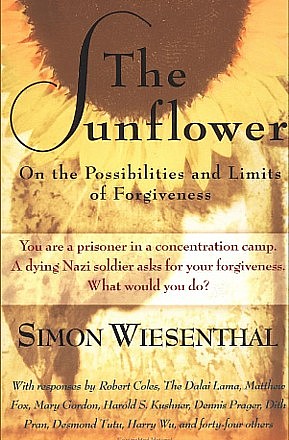 ......is The Sunflower by Simon Wiesenthal. I've never heard of the author or the book, but i'm looking forward to the book because it seems really different from all the other Holocaust related books we've read in school. Apparently, after reading an online book review (click here) I'm curious how Simon Wiesenthal reacted after hearing a Nazi soldier asking for forgiveness for the crimes against Jews. The novel inspired many essayists to write about what they would have done if they were Simon Wiesenthal. I'm curious to what I would have done in his place once I'm done with the book.
Should be interesting.
Tuesday, January 29, 2008

Subscribe to:
Posts (Atom)